online or in person
 special education welcome
Set your own rate and hours, and teach Montréal families who want a certified teacher: online, at a student's home or at one of the city's public libraries.


Certified in this province or another one? If your certificate is in good standing, you can apply. We verify every educator before they work with students.
 Registered ECEs welcome
 No cost to apply


Tip: use the same legal name on every document. It's the fastest way to approval.
One rule to know: don't tutor students you currently teach at school.
Every educator is checked before they meet a student. Here's what we ask for, why we ask, and what families can and can't see.
Parents never see your ID, email or home address. They see your photo, bio, certification, subjects and availability. For in-person lessons they see a general area, never your address.
Upload your ID through the platform only. We don't accept documents by email.
A short video on why we need your ID and how we protect your personal information.
Québec teachers are licensed by the Québec government's education ministry under the Regulation respecting teaching licences. There is no professional order for teachers. A licensed Québec teacher meets these four requirements.

A four-year Bachelor of Education, or a qualifying master's in education for people who already hold a degree in a school subject.
Official sourceTeachers file a Declaration Concerning a Judicial Record with every new license or renewal, and report any change within 10 days. To tutor with Connect Education, you also need a police check that includes a vulnerable sector check.
Official source
Passing the recognized language exam, the TECFÉE in French or the EETC in English, is required for a teaching license, except a provisional one.
Official source
The teaching diploma (brevet d'enseignement) is a permanent license. Newer teachers may first hold a temporary license, such as a provisional license or a probationary teaching permit. Retired, or your certificate is no longer active? You can still apply with a valid police check that includes a vulnerable sector check.
Official sourceSupply teachers, registered ECEs and retired teachers tutor with us too. Here's what each needs.
Occasional and long-term occasional teachers apply with the same certificate in good standing. Tutoring fits around the days you're called in.

Early childhood educators registered with their provincial ECE regulator, in good standing, are welcome, especially for early learning.
Retired and no longer renewing your membership? You can still apply with a valid police check that includes a vulnerable sector check.
 Test prep
 French Immersion
The Centre de services scolaire de Montréal alone serves 113,939 students in 185 schools and centres, including 7,450 students who have just arrived in Canada. Here's what families ask for most:

Families ask for help in 80+ subjects. Add the subjects and grades you teach to your profile, and families looking for them can find you.

The most requested subject, from counting and fractions to functions and calculus.
See math tutoring
English Language Arts (ELA): phonics and early reading, comprehension, grammar and essay writing up to Grade 12.
See English tutoring
French Immersion, core French and FSL, often for families who don't speak French at home.
See French tutoring
Beyond school subjects, families ask for exam prep, study skills and programs for every age.

Many families look for a teacher who has taught students like theirs. Add your special education experience to your profile so they can find you.
Not sure what to put in your profile? Read the tutor profile guidelines and tips for working with parents.

In person means at the student's home or at a public library. If you're not comfortable going to a family's home, you can choose the library. You pick the parts of Montréal you'll travel to.
Bibliothèques de Montréal has libraries in all 19 boroughs, and membership is free for residents. MTLWiFi, the city's free Wi-Fi, is available at the libraries. Check each library's rules before you plan a session there.

Teach from wherever you work best, with no commute. Many teachers mix online and in-person lessons, and you can change what you offer in your profile at any time.
Set up your profile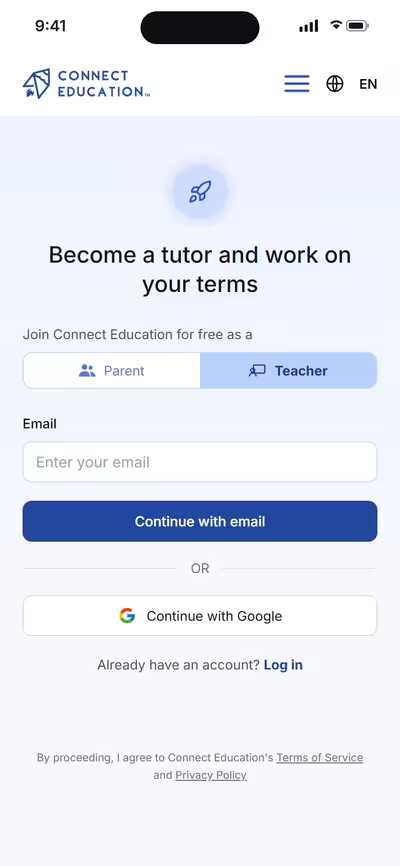
Choose Teacher, sign up with your email or Google, then set a password.
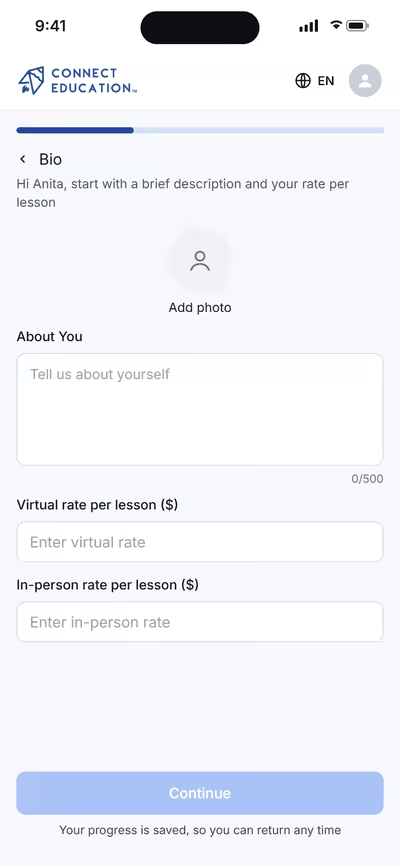
Add a photo, a short bio, your two lesson rates and what you teach.
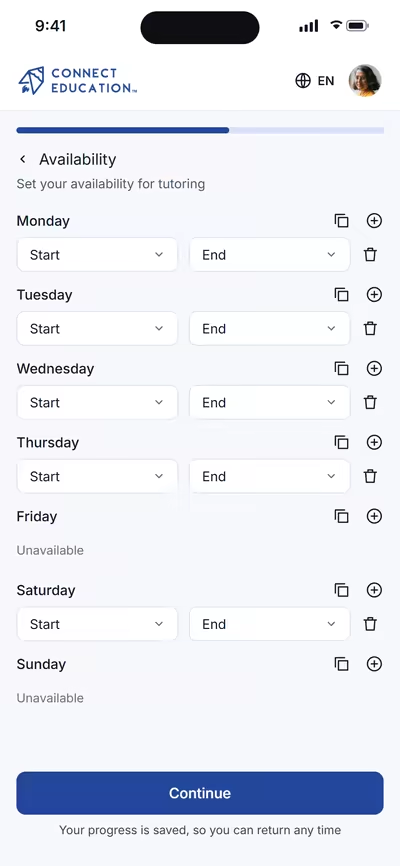
Pick your weekly hours and the places you're happy to teach.
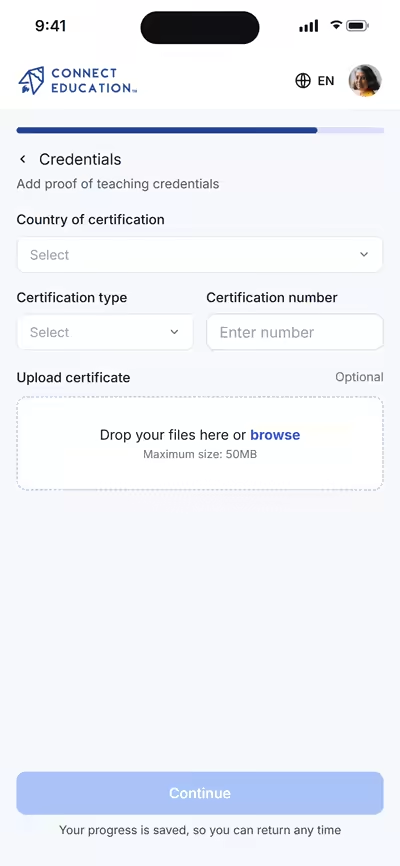
Upload your certificate and ID securely. We review them and email you when you're approved.
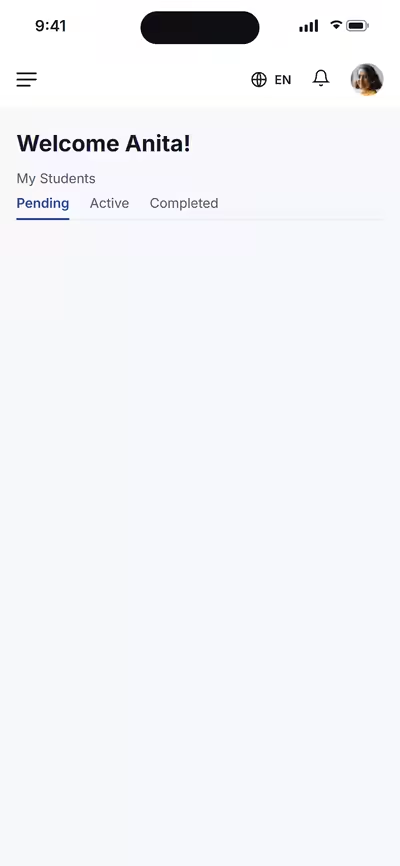
Say yes to a family, chat before the first lesson, and manage everything in one place.
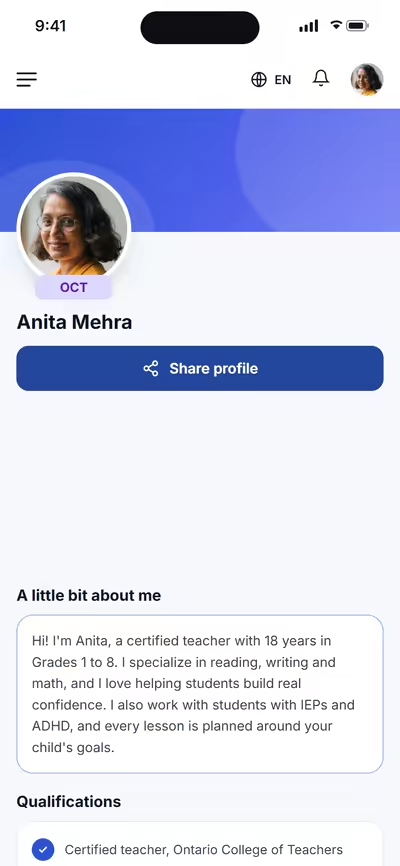 Your rates, your call
 Your hours, your calendarOnline, home or libraryFamilies across Canada
Certified teachers and registered ECEs across Canada welcome. Teach the way you want, and let us handle the rest.

Choose separate in-person and virtual rates. They show on your profile and you can change them any time.
Set your weekly hours and teach online, in person or at a public library, in the area you choose.
We match you with families who fit your subjects, grades and hours, including families looking for special education support in ADHD, ASD, IEPs and dyslexia.

No sign-up cost. Families pay through the platform and your earnings are paid out to you. A simple platform fee applies only when you teach.
One dashboard for your profile, your schedule, your families and your lessons. Here is what you get from day one.
Families send you requests. Accept, message parents and students, and plan the first tutoring lesson, all in one place.

Send your profile link to families on WhatsApp, Facebook or email and bring in your own students too.
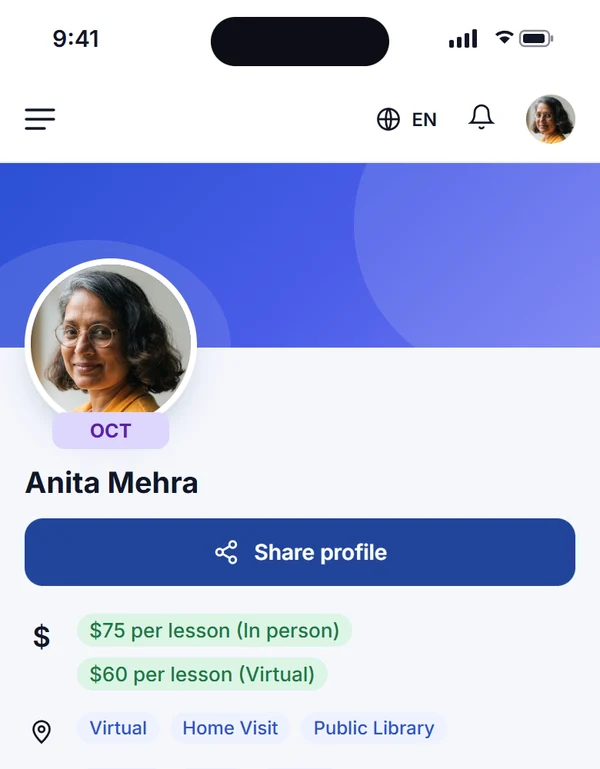
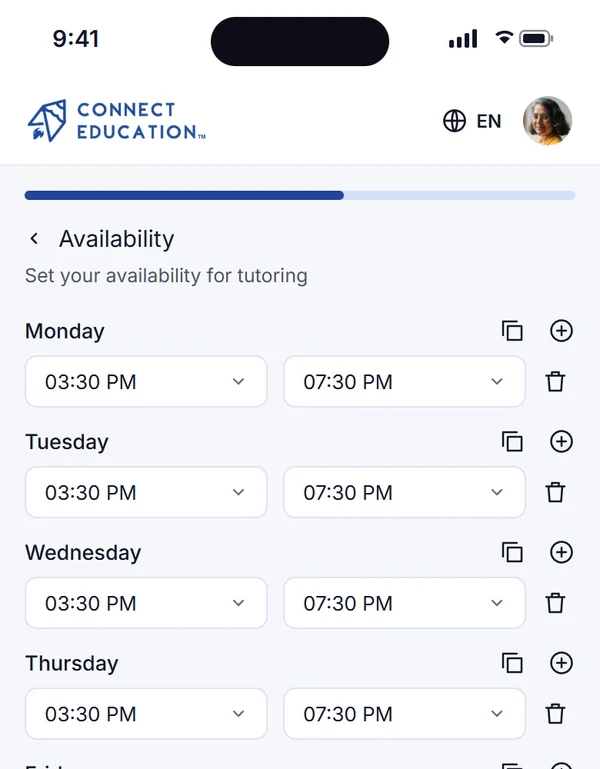
Choose the times you want to teach. Families only request times that work for you.
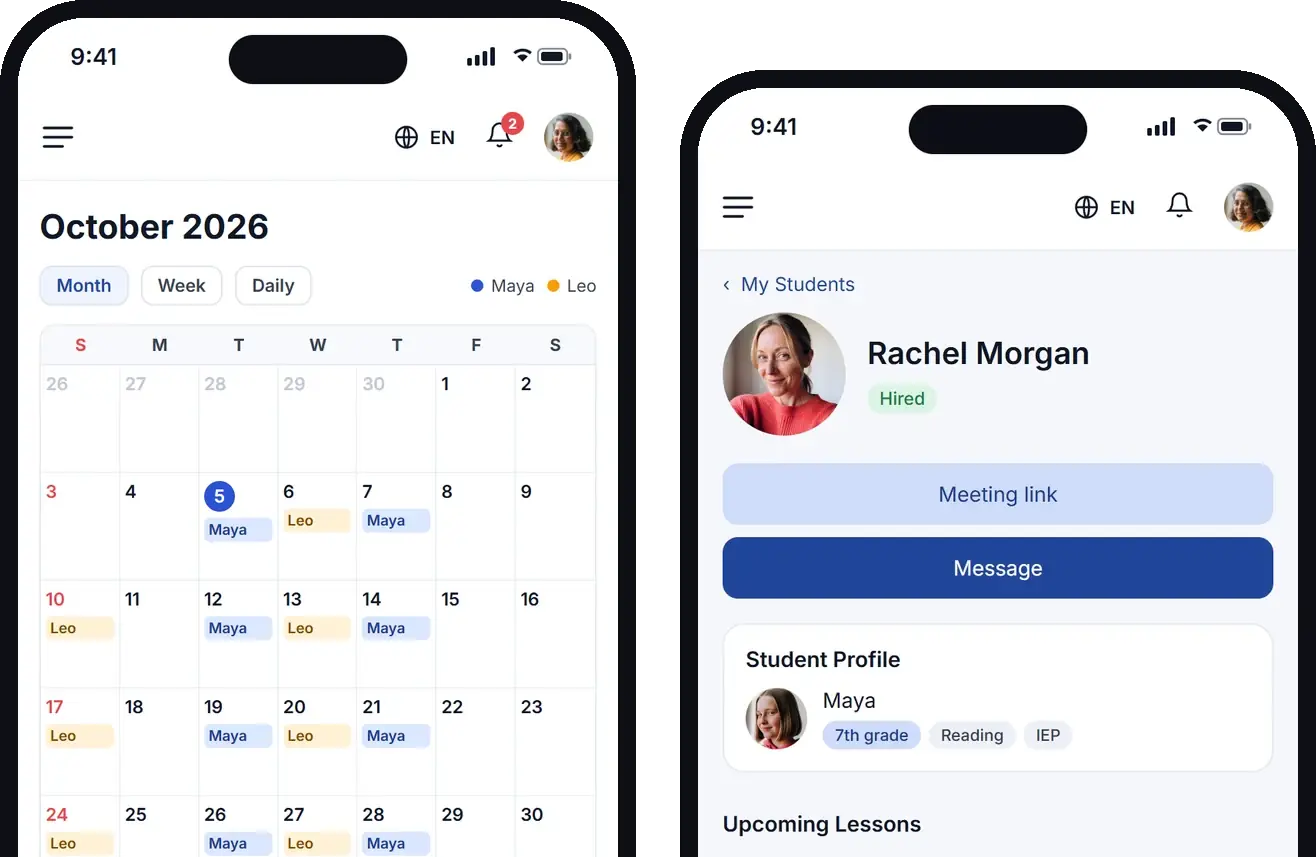
See every upcoming lesson, add a meeting link or a location, reschedule in a tap and join with one click.



Questions about matching, scheduling or pricing? Reach us whichever way suits you, and our team will take it from there.
 Free to joinYour hours
You set your own rate. Joining is free. When you teach, a platform service fee of 25% of each session rate comes out of the amount charged, and it covers the platform, payments and admin, so you never chase an invoice.
Yes. Families look for help in both languages: French for students in English schools or new to Québec, and English for students in French schools. Add the languages you teach in to your profile so the right families find you.
Yes. Secondary IV and V students write ministry exams that count for half of the final mark for the competencies tested, and many families want practice beforehand. Focus on the skills behind the exam, not only past papers.
No. Many teachers tutor online only, or meet families at a library branch they can reach by transit. You choose the areas you'll travel to, so you only get requests that work for you.
No. You can teach online only, or meet families at a library branch. Choose what you offer in your profile and change it whenever your plans change.
Most of the wait is the document check. Clear, current documents with the same legal name on each are the fastest route, and we'll let you know by email.